
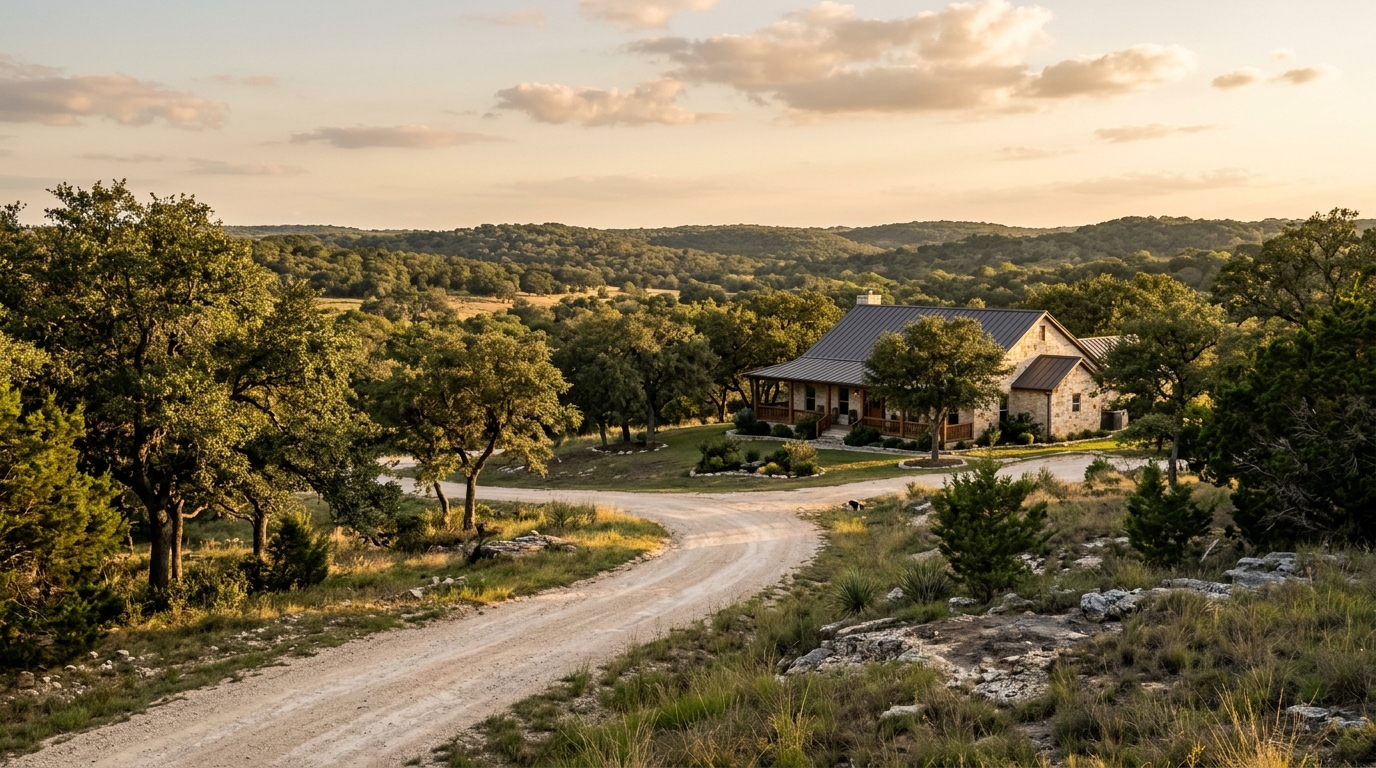
A buyer two weeks ago passed on a 12-acre tract eight minutes from the Blanco square because the listing photos were bad and the road in was caliche. He bought in-town instead and paid $140k more for half an acre. That math is the whole post, but let me walk through why it keeps happening and why the stretch between Blanco and the county line on the south side of 281 is the piece of this market almost nobody is pricing correctly right now.
Here's the number that should stop you. Redfin's October 2026 report on Blanco County has median sale prices up 37.8% over the three months ending September 2026 versus the same window last year. That's not a typo and it's not a cherry-picked micro-market. That's the whole county. Meanwhile Movoto has the median sale price inside the town of Blanco at $699,000 for October 2026, and Realtor.com has the median listing at $661K, up 6.57% year over year.
So the town is appreciating at a normal healthy clip. The county is appreciating at a rate that would make a Phoenix flipper in 2005 blush. The gap between those two numbers is where the opportunity lives.
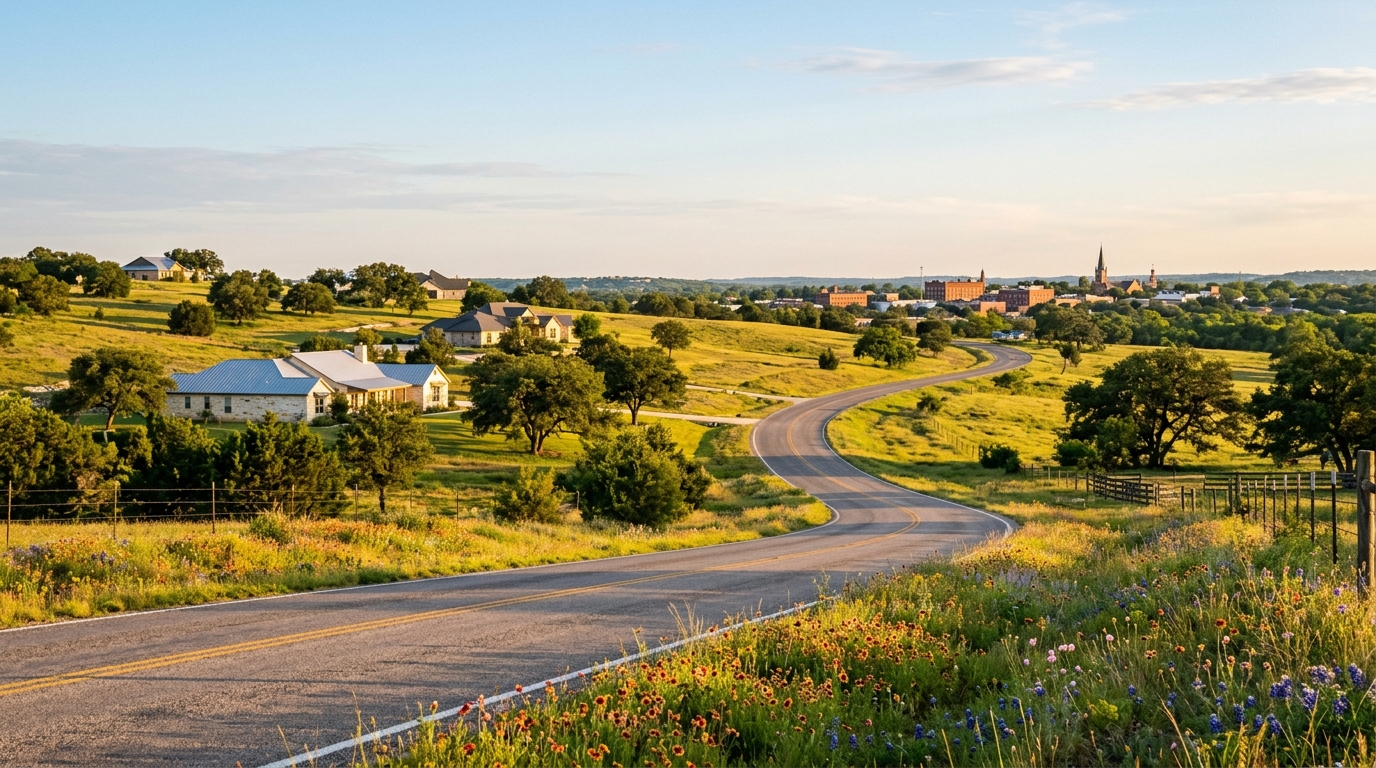
Most buyers moving in from Austin or San Antonio hit Blanco the same way. They drive up 281, park on The Square, eat at Redbud Cafe, walk across to look at the Old Blanco County Courthouse, maybe swing out to Real Ale on Blanco River Road for a flight, and they come home convinced that the town is the thing. Then they ask their agent to find them something walkable to Main Street. That's how you end up paying $699k median for a lot you can mow in an afternoon.
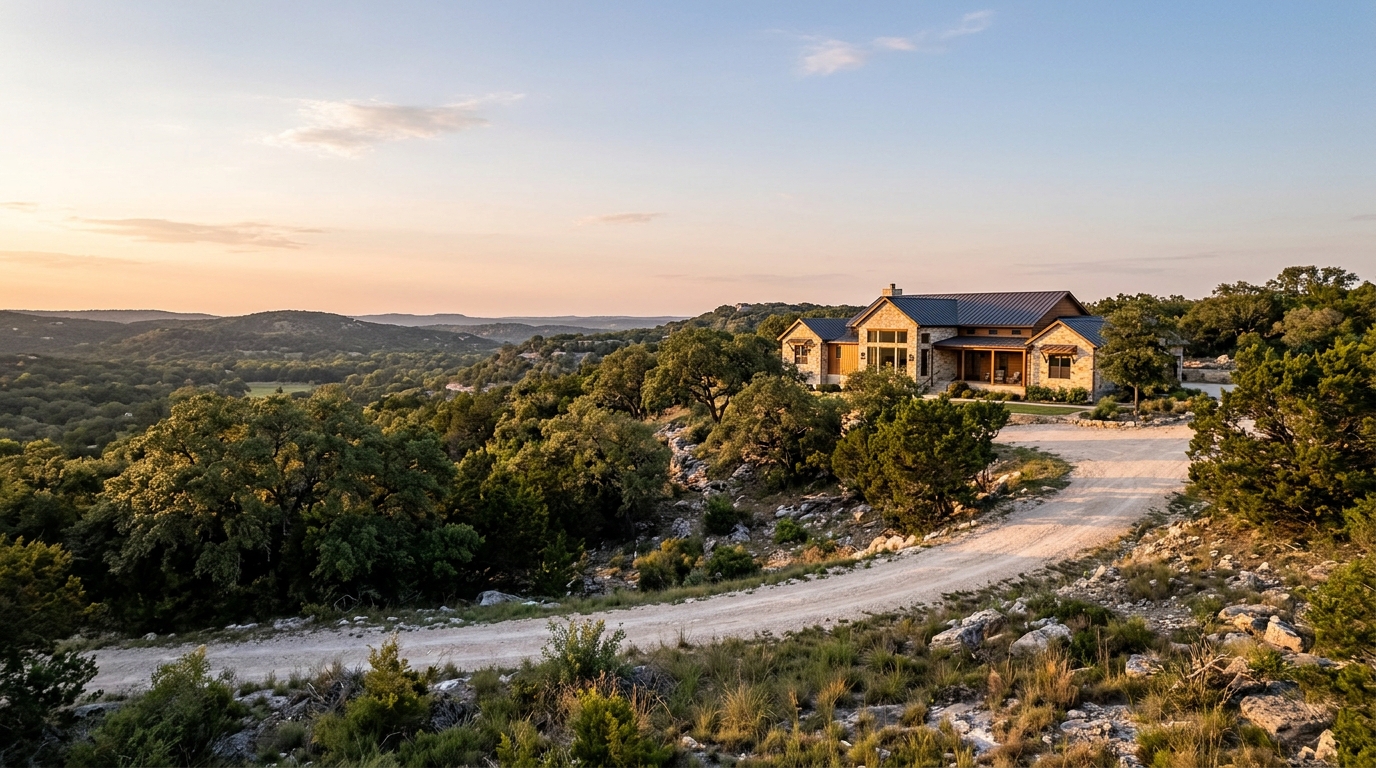
The stretch I'm talking about is south and southeast of town, roughly between the Blanco River and the Kendall County line, with pieces along Flat Creek Road, Cielo Springs, and the ranch roads that peel off 281 heading toward Twin Sisters. You're still ten to fifteen minutes from the courthouse. You're still inside Blanco ISD in most spots. You're sitting on acreage that qualifies for ag or wildlife exemption if it's structured right, which changes your annual tax bill by a factor most buyers don't do the math on until year two.
I'll give you a concrete example of why that exemption matters. A 15-acre tract with an ag valuation can carry a property tax bill in the low four figures. The same tract without the exemption, taxed on market value, can run $8k-$12k a year or more depending on improvements. That delta is your mortgage payment on a decent truck. And Blanco County's appraisal district is one of the more straightforward ones in the Hill Country for keeping an ag valuation in place as long as you're actually running something — hay, cattle, goats, bees, whatever fits the acreage. Wildlife exemption is the other path and it's underused.
Now the parts nobody tells you.
Septic in Blanco County is its own animal. A new OSSF permit runs $200-$500 and takes two to six weeks if your soil scientist is on top of it. If you're looking at a lot in a subdivision, the county will not issue a septic permit until the final plat for that subdivision has been approved and filed of record. I've watched buyers put money down on a tract in an older subdivision that never got its plat finalized, then spend six months trying to untangle it before they could break ground. Ask your agent for the plat status before you write an offer. Not after.
The 10-acre rule trips people up too. Yes, if you have 10+ acres and a single-family dwelling, there's a statutory exemption from OSSF permitting. No, that does not mean you can put the system anywhere you want or ignore setbacks. And when you go to sell, the next buyer's lender or title company may require that system to be permitted at point of sale, which turns into a surprise five-figure line item nobody budgeted for.
Aerobic systems — which you'll need on a lot of these southern Blanco County tracts where the soil over limestone is thin — require three inspections a year and a two-year maintenance contract. That's an ongoing cost, not a one-time install. Budget $300-$500 a year for the contract after the first two years.
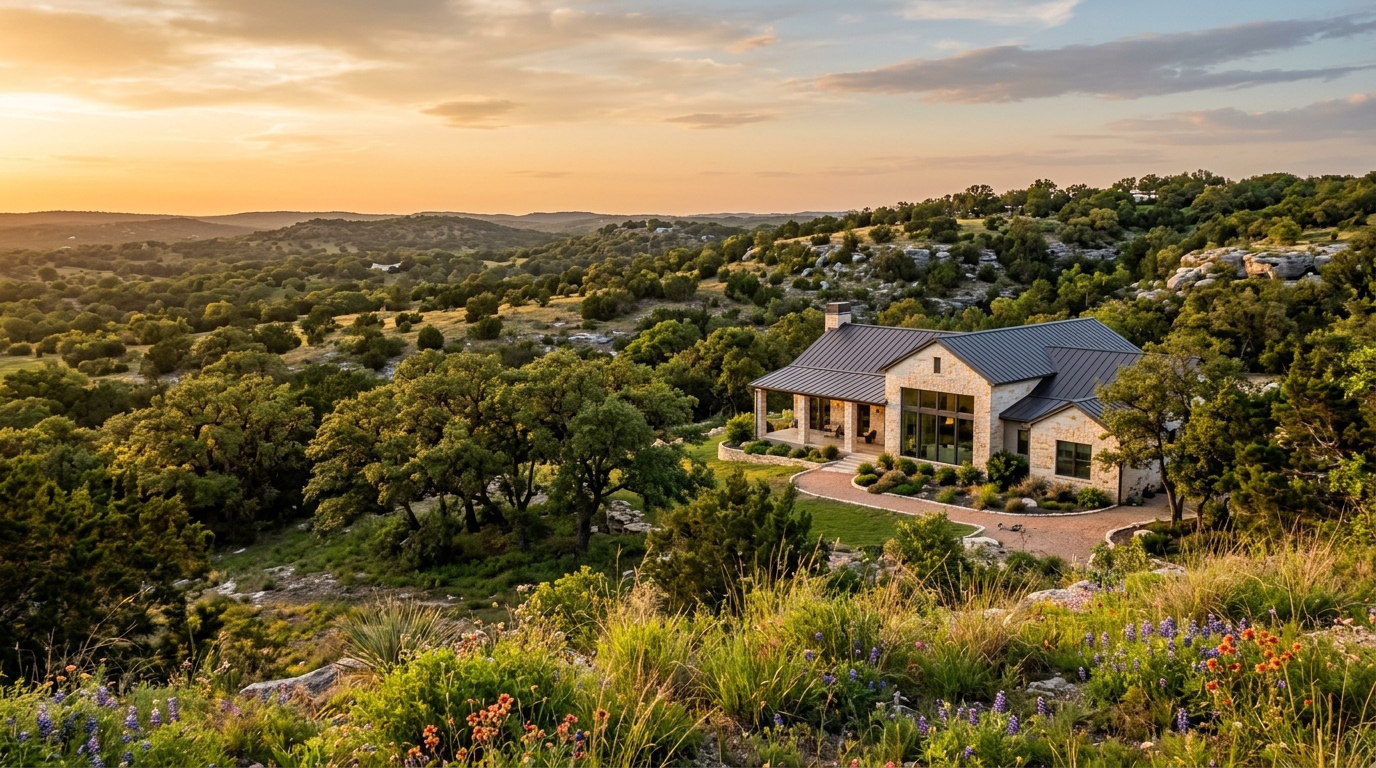
Wildfire risk is the other thing I bring up every single time with buyers looking at acreage out here. Something like 99% of properties in Blanco County carry some wildfire risk over a 30-year window. That shows up in your insurance quote and it shows up in how you clear brush around the house. Cedar within 30 feet of a structure is a liability. Plan for defensible space before you fall in love with the oak canopy.
Zoning is the newest wrinkle and it's worth understanding before you buy inside city limits. There's been attention recently on the City of Blanco's zoning procedures — specifically the fact that the city's Unified Development Code has some discrepancies with Texas state law around who can protest a zoning change and what votes are required. Blanco's ordinance requires protesting property owners to reside inside city limits. Texas state law bases eligibility on property ownership regardless of residency, and state law wins when they conflict. The city can also initiate rezoning of private property without the owner asking for it. I'm not taking a side on whether that's right or wrong — that's a city council conversation — but if you're buying inside Blanco city limits with any thought toward future development, short-term rental, or a change of use, read the UDC and talk to a land use attorney before you close. Don't assume what's allowed today is allowed in three years.
Short-term rental is where the southern stretch gets interesting from a cash flow angle. Properties within a few miles of Blanco State Park or the Blanco River have a real STR case — the park's riverside stretch with the low stone dams and the swimming holes draws steady traffic spring through fall, and the Lavender Festival pulls weekend demand you can price around. A tract with a well-built main house and a barndominium or guest casita gives you two revenue doors on one septic footprint. Fiber internet is finally reaching pieces of the county that didn't have it two years ago, which matters more than people realize for nightly rates — remote workers will pay a premium for a listing that specifies actual upload speeds.
On the top end, the Q3 2026 Hill Country ranch report had five out of seven verified $1M+ ranch sales in Blanco County this year clearing $5 million, with an average of 413 days on market. If you're in that bracket, patience is the strategy. These aren't properties that move in 30 days with a bidding war. They sit, they get the right buyer, they trade. Don't let a listing agent push you on a timeline that doesn't fit the segment.
Back to the buyer from two weeks ago. The reason he passed on the 12 acres wasn't really the caliche road. It was that he'd been trained by three months of Zillow scrolling to think "Blanco" meant "within walking distance of Main Street." He wanted to be able to walk to the Buggy Barn Museum and the Redbud on a Saturday. Fine. That's a lifestyle choice and it's a valid one. But he paid an enormous premium for a half-acre lot because he didn't understand that a ten-minute drive bought him 24x the land, an ag exemption, a shot at STR income, and exposure to a county appreciating at nearly six times the rate of the in-town median.
If you're coming to look at Blanco in the next few months, do two trips. One day for The Square and the river. One day driving the county roads south and east with a plat map, your phone, and the current acreage listings pulled up. Look at the 281 corridor on both sides. Ask every listing agent about plat status, septic type, and ag valuation status before you ask about the kitchen finishes. The finishes you can change. The land math you can't.
The in-town stuff will still be there. It's just not where the move is right now.
Data sourced from Redfin's 2026 Blanco County Housing Market report (October 2026), Movoto's Blanco TX Market Trends (November 1, 2026), Realtor.com's Blanco TX Housing Market data (October 15, 2026), and the Q3 2026 Hill Country Ranch Market Report (November 5, 2026). Verify current numbers with a local agent before acting.
Leave a Comment