
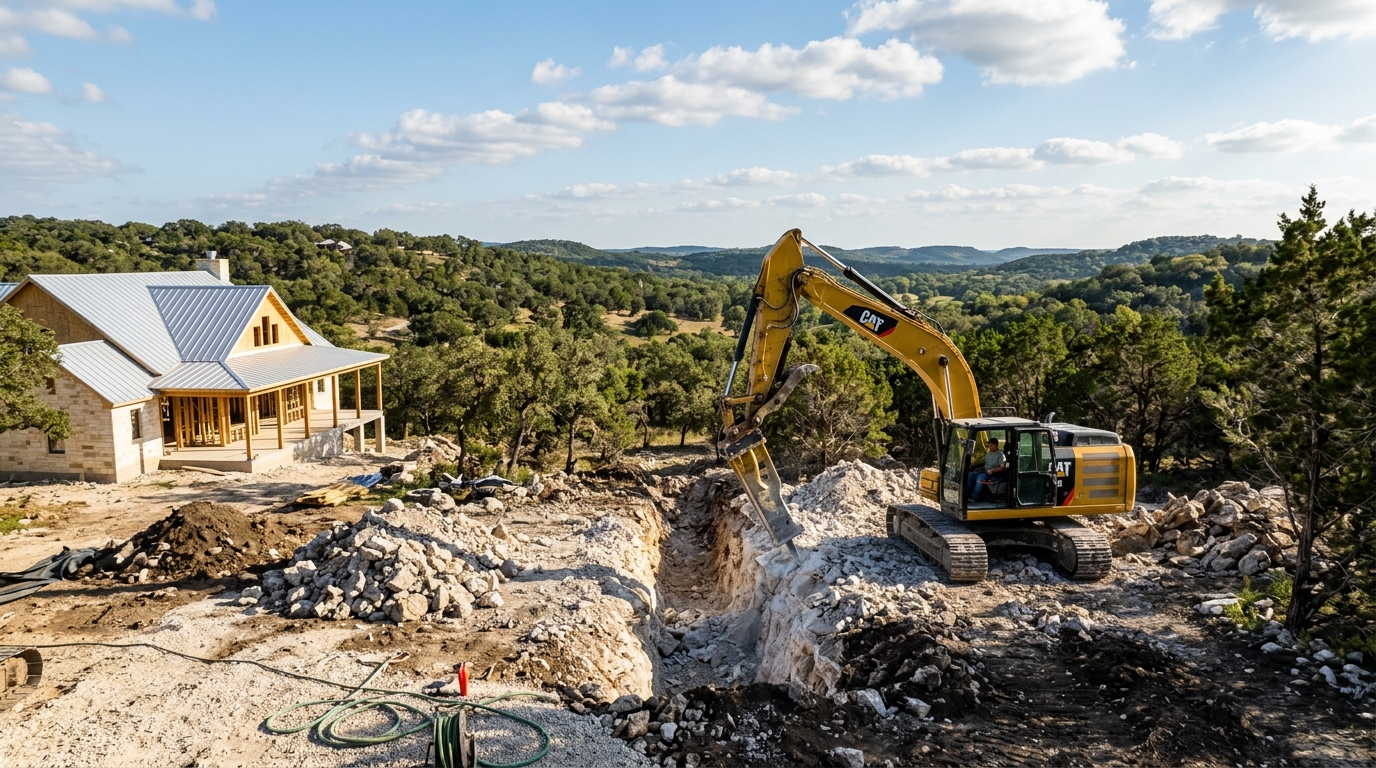
Look, I get it. When you're out walking a beautiful five-acre lot in Spring Branch or looking at a view of Canyon Lake, the last thing you want to talk about is sewage. It’s not sexy. It doesn’t have granite countertops or a three-car garage. But after building over 400 homes in this dirt—or lack of dirt, mostly—I can tell you that the septic system is the one thing that can absolutely wreck your budget if you aren’t paying attention. I’ve seen people buy a 'deal' on a lot only to find out they’re sitting on a solid shelf of limestone that requires a week of specialized jackhammering just to bury a tank.
How much does a septic system cost in the Hill Country in 2026?
As of April 2026, a standard aerobic septic system in the Hill Country typically costs between $14,000 and $19,000, depending on the rock content and the size of the home. According to recent permit data from Comal and Hays counties, labor costs have stabilized a bit since the post-pandemic craziness, but the machinery—specifically those big hydraulic rock hammers—still costs a fortune to run. If you’re lucky enough to have deep soil (which is about as common as a cool breeze in August around here), you might get away with a conventional system for around $10,000, but don't count on it. Most of the neighborhoods we work in require aerobic systems because the soil just isn't deep enough to filter water naturally.
Anyway—the point is you need to budget for the high end. I always tell my clients at Parker Design & Consulting that if you haven't done a soil profile yet, you're just guessing. And guessing with $20k isn't my idea of a good time. We use the 'Parker Method' to avoid these surprises by getting the site prep and utility plan done before you ever break ground. It saves you from that mid-build panic when the installer calls and says he hit a granite vein he didn't expect.
Why is the Hill Country so difficult for septic installs?
It’s the rock. It’s always the rock. People move here from Houston or Dallas and they're used to digging a hole with a shovel. Try that here and you’ll just break your shovel and your spirit. In places like Bulverde and Canyon Lake, we’re dealing with Glen Rose Limestone. It’s hard, it’s thick, and it’s everywhere. When we’re digging for a tank, we often have to bring in a 300-series excavator with a hammer attachment that sounds like a machine gun for two days straight.
Then you’ve got the expansive clay. In some pockets toward New Braunfels or out toward Seguin, the soil moves like a living thing. If your septic lines aren't bedded correctly in sand, the shifting clay will snap those PVC pipes like toothpicks. It’s why I’m so picky about who I work with. I’ve seen 'cheap' installers skip the sand bedding, and two years later the homeowner has a swamp in their front yard. Not exactly the 'Hill Country dream' they signed up for. If you’re looking for a house that’s already built, check the latest listings on our site, but pay close attention to the age of that septic pump.
Aerobic vs. Conventional: What’s the difference?
Okay, so here’s the deal. A conventional system is the old-school way—a tank that flows into a gravel drain field. It relies on gravity and 'good' soil. In the Texas Hill Country, 'good' soil is a myth. That’s why 90% of what we put in now are Aerobic Treatment Units (ATUs). Think of an aerobic system like a mini-wastewater plant in your backyard. It uses oxygen to break down waste faster and then sprays the treated (and chlorinated) water out through purple-headed sprinklers.
Yes, you heard me. Sprinklers. (And no, don't let the kids play in them—it’s treated effluent, not Sparkletts.) The upside is these systems work anywhere. The downside? They have moving parts. Pumps, aerators, and timers. They require a maintenance contract by law in most counties like Comal and Guadalupe. You’re looking at about $200-$300 a year for someone to come out and make sure the thing isn't about to blow a fuse. It’s just the cost of doing business out here. Honestly, I prefer them because they're more environmentally friendly for our aquifers, which we need to protect if we want to keep living here.
Quick tips for buyers before you sign the contract
If you're looking at a piece of land, look at the trees. Lots of cedar? You’re probably on thin soil over rock. Big, deep-rooted oaks? You might have some dirt to work with. But don't bet your mortgage on it. Here is my 'no-BS' checklist: 1. Get a septic inspection if the house is existing. Not just a 'yeah, it flushes' but a full pump-out and camera line inspection. 2. If it's raw land, check the minimum lot size. Most counties require at least an acre if you’re on a private well and septic. 3. Ask about the 'OSSF' (On-Site Sewage Facility) permit. If the seller can't produce it, walk away.
Anyway, I’ve spent enough time talking about toilets for one day. If you’re thinking about building and want to do it right—without the $20,000 surprises—reach out to us at Parker Design & Consulting. Or, if you just want to find a house where the septic is already sorted, hit up Tiffany and me at Collab-RT Realty. We’ve been through the trenches—literally—so you don’t have to. Catch you at the next BBQ.
Septic System FAQ
How long does it take to install a septic system in the Hill Country?
A: Usually, the physical installation takes 3 to 5 days. However, the permitting process in counties like Comal or Hays can take 2 to 4 weeks depending on the backlog. If you hit heavy rock that requires hammering, add another 2 days to the timeline.
Do I really need a maintenance contract for an aerobic system?
A: Yes. Texas state law requires owners of aerobic systems to maintain a service policy with a licensed provider, unless the local regulatory authority allows homeowners to do it themselves after a certification course (rare in this area). You'll typically have 3 inspections per year.
Can I build a pool over my septic lines?
A: Absolutely not. You have to maintain specific setbacks—usually 5 to 10 feet from tanks and spray fields—to prevent damage. This is why we focus so much on the master plan at Parker Design & Consulting; you have to know where the 'un-buildable' spots are before you design the house.
How often should I pump my septic tank?
A: For a standard family of four, you should pump your tank every 3 to 5 years. Based on data from the Texas Commission on Environmental Quality (TCEQ), neglecting this is the number one cause of system failure in our region.
Data sourced from TCEQ and Comal County Engineer’s Office. Always verify current regulations and permit fees with your local county authority.
Frequently Asked Questions
How much does an aerobic septic system cost in 2026?
In the Texas Hill Country, expect to pay between $14,000 and $19,000 for a full aerobic system install, including permits and rock excavation.
Why do I need an aerobic system instead of a conventional one?
Most Hill Country soil is too thin or rocky to properly filter waste in a conventional drain field. Aerobic systems use oxygen and sprayers to treat wastewater safely on top of the rock.
Can I install my own septic system in Comal County?
No. Texas law requires OSSF systems to be installed by a licensed professional. You also need a permit and a site evaluation by a registered sanitarian or engineer.


Leave a Comment