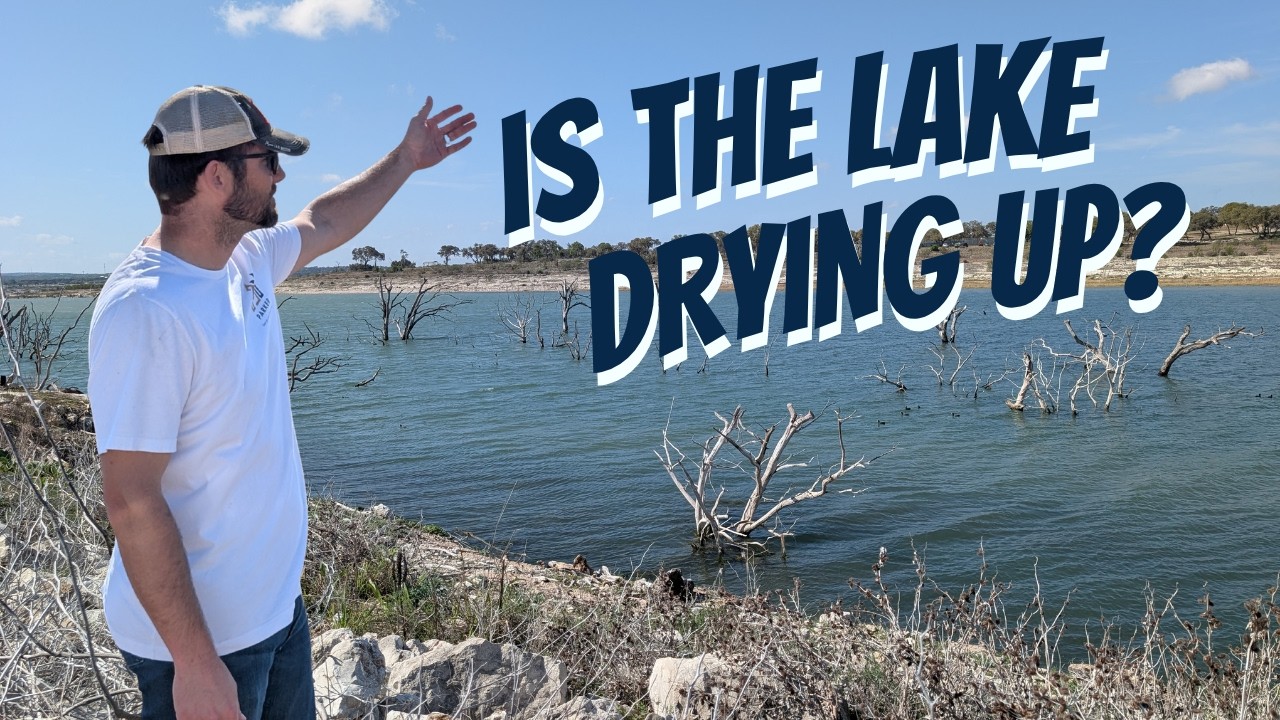
Look, if you’ve driven across the FM 306 bridge lately, you’ve seen it. The 'bathtub ring' around Canyon Lake is looking more like a stadium seating section at this point. It’s ugly. I’m not going to sugarcoat it for you. People call me every single week—sometimes twice a day—asking if they should even bother buying a house in Canyon Lake or Spring Branch anymore. "Ryan, is the lake just going to turn into a dusty canyon?"
I get it. I live here. I work here. I’ve built 400+ homes in this dirt, and I’ve seen this lake go from 'holy crap, it’s going over the spillway' to 'holy crap, I can walk to that island.' Right now, in March 2026, we’re definitely in a 'holy crap, where’s the water' phase. But before you cancel your moving truck and head to East Texas (don't do that, the humidity will kill your soul), let’s talk about how this lake actually works. It’s not as simple as 'it didn't rain at my house today.'
Why is the water so low at Canyon Lake right now?
It’s not just a bad summer. We’ve been grinding through about five to seven years of below-average rainfall. And in the Texas Hill Country, that adds up. We’re currently sitting well below the 909-foot mark—that’s the 'conservation pool' or what we call 'full.' When the lake hits those record lows like it has recently, things get weird. Boat ramps turn into glorified parking lots that don't lead to water. The shoreline gets long. Your 'lakefront' property might currently be a 'staring at a lot of limestone' property.
But here’s the thing people miss: Canyon Lake is a giant bucket, and right now, more people are sipping from the straw than there is rain pouring into the top. Plus, the sun in Texas is brutal. We lose millions of gallons every single day just to evaporation. The lake is literally sweating itself away while we wait for a big storm. And since I spend half my time at Parker Design & Consulting figuring out how to position houses on these rocky hills, I can tell you—the land hasn't changed, even if the water line has.
Does local rain actually fill up the lake?
Short answer: Not really. You could have a monsoon in your backyard in Bulverde and it wouldn’t do much for the lake level. Canyon Lake doesn't care about your local sprinkler schedule. It cares about the watershed.
The lake fills up from rainfall upstream. We need the sky to open up over the Guadalupe River watershed. That’s the water that actually flows into the reservoir. If it rains in Kerrville or Comfort, we’re happy. If it only rains at the Pit Stop BBQ in Canyon Lake, it’s nice for the grass, but the lake level won't budge an inch. It takes those massive, slow-moving storm events to really move the needle. Average rain just keeps us even; we need the big stuff to actually refill the bucket.
The History of the 'Texas Refill'
I’ve been around long enough to see the cycle. Texas weather is basically ten years of drought followed by a flood that makes you want to build an ark. Look at the history—1978, 1987, the early 90s, the early 2000s. Every single time people started saying the lake was gone for good, Mother Nature showed up and filled it back up in a matter of weeks. In some cases, it went up a dozen feet in a single event. It’s happened before, and it’ll happen again. It’s just a matter of when, not if.
Thinking about moving out here despite the dry rocks? You should probably grab my Hill Country Relocation Guide. I put all the stuff in there that other realtors won't tell you—like which neighborhoods actually have decent water service and where you’re going to spend a fortune on a septic system.
Is the Hill Country growth killing the lake?
This is the big elephant in the room. You see all the new rooftops in New Braunfels and Spring Branch and you think, "Well, no wonder the lake is empty, everyone’s taking a shower at the same time."
Growth is a factor, sure. More people means more demand. But Canyon Lake wasn't just built so we could pull a Tube behind a Malibu. It was built for flood control and water supply. The Texas Water Company and the folks who manage the regional supply are constantly playing chess with these levels. They’ve even paused water service for some new developments lately because they’re trying to be smart about the drought. Most of our water out here is a cocktail of Canyon Lake, the Trinity Aquifer, and other regional sources. It’s managed heavily. Is it a concern? Yeah. Is it the reason the lake is low? Only a small part of it. The drought is the real villain here.
What should buyers realistically expect in 2026?
If you’re looking at houses right now, buy for the long term. Don’t buy a house because the water is at the back door today, and don't skip a house because the water is 200 yards away right now. Buy because you love the Hill Country. The lake is resilient. It’s recovered from every single drought since 1964, and it’ll recover from this one too.
When I’m helping clients at Collab-RT Realty, I tell them to look at the 'bones' of the property. Does it have the view you want even if the water is low? Is the neighborhood solid? If you’re building a custom home with me at Parker Design & Consulting, we’re going to talk about water conservation and maybe even rain catchment, because that’s just the smart way to live out here now.
The lake levels are going to bounce around. That’s the deal you make when you live in Central Texas. You get the sunsets, the hills, and the deer, but sometimes you get a really long walk to the water.
Canyon Lake Water FAQ
How deep is Canyon Lake when it’s full?
At the conservation pool of 909 feet, the lake is about 125 feet deep near the dam. Even when it’s 'low,' there is still an massive amount of water in there. It’s not just a puddle.
Where does the water in Canyon Lake come from?
Mainly the Guadalupe River. It drains a huge area of the Hill Country. We need rain in the counties to our west and north to really see the lake rise.
Are the boat ramps always closed when the lake is low?
Not all of them. Comal County and the Army Corps of Engineers close them as they become unsafe. Some of the deeper ramps stay open much longer than others. You just have to check the daily status before you hook up the trailer.
Is it still a good time to buy land near Canyon Lake?
Honestly? Probably. Prices tend to soften a bit when the lake looks dry because people get scared. If you have a 10-year horizon, you’re buying during the 'ugly' phase of the cycle, which is usually when the best deals happen.
Anyway, that’s the state of the lake. It’s dry, it’s rocky, but it’s still the best place in Texas to hang your hat. If you want to talk about land, building, or why your neighbor's well went dry, give me a shout. I’m usually out on a job site or at the office, but I’ll get back to you.
Click to view video transcript
0:00 - If you've been around Canyon Lake lately, you've probably noticed the water levels are lower than normal — and it's something a lot of residents and buyers are concerned about right now. 0:08 - I've seen the same comments many of you have — concerns about drought, water supply, and whether the lake will ever return to normal levels. 0:15 - So in this video, I want to talk honestly about what’s happening, what to expect, and what residents and buyers should realistically understand about Canyon Lake water levels. 0:24 - Hi, I'm Ryan Parker. I'm a Texas real estate broker here in the Canyon Lake area, and I work closely with land and home construction throughout the Hill Country. 0:33 - I live here, work here, and like many of you — I care deeply about this area and the long-term future of Canyon Lake. 0:40 - In this video, I want to walk through five important things: Why Canyon Lake levels are so low, How the lake actually fills, What the history shows about drought cycles, What growth and water demand really mean And what buyers and residents should realistically expect moving forward 0:57 - Let's start with the obvious. 0:59 - Yes — Canyon Lake levels have dropped significantly over the past several years. 1:03 - This isn’t just perception — it’s measurable. 1:06 - At certain points in recent years, the lake reached some of the lowest levels seen in more than 50 to 60 years, largely due to prolonged drought conditions affecting the Hill Country region. 1:13 - And even today, the lake is still well below what’s considered “full,” which is about 909 feet above sea level, known as the conservation pool. 1:26 - That drop has had real impacts: boat ramps closing, shoreline changes, property views changing, recreational access becoming limited 1:38 - So if you're concerned — you're not alone. 1:40 - This is something residents across the region are paying attention to. 1:43 - So the biggest reasons Canyon Lake levels are so low is long-term drought. 1:48 - Not just a dry summer — but several years of below-average rainfall. 1:52 - In fact, experts point to five to seven years of unusually low rainfall, especially across the watershed north of the lake, where inflow actually matters the most. 2:03 - That’s important because Canyon Lake doesn’t refill from like local rain alone. 2:08 - It relies heavily on rainfall upstream — especially in the Guadalupe River watershed, which feeds into the reservoir. 2:16 - When that rainfall doesn’t happen, water keeps leaving the lake — but not enough is flowing back in to replace it. 2:22 - In simple terms: More water is leaving than entering. 2:25 - And that’s what causes levels to fall over time. This is something many people misunderstand. 2:31 - Canyon Lake was created in 1964, primarily for flood control and water supply, not just recreation. 2:38 - That means it was designed to: protect downstream communities from flooding, store water during drought, supply water to surrounding areas 2:46 - And the way it refills is important to understand as well. 2:49 - The lake fills from: rainfall upstream, runoff from the Guadalupe River, major storm events 2:56 - Sometimes people assume normal rainfall will refill the lake — but that’s usually not enough. 3:01 - Experts have noted that average rainfall alone doesn’t refill the lake — it usually takes above-average rainfall or major storm events to significantly raise levels. 3:12 - And historically, that’s exactly what has happened. 3:15 - This is very important — and often its overlooked. 3:18 - Canyon Lake — like many reservoirs in Texas — goes through cycles. 3:22 - Periods of drought… followed by periods of refill. 3:25 - There have been several major flood events throughout the lake’s history that dramatically raised water levels, including floods in: 1978, 1987, early 90s, late 90s, early 2000s 3:38 - Each of those events pushed lake levels significantly higher in a relatively short period of time. 3:44 - More recently, after severe drought conditions, heavy rainfall raised water levels by over a dozen feet, allowing previously closed boat ramps to reopen. 3:54 - So history shows: Yes — drought happens. But refill cycles happen too. 4:01 - Now let’s talk about something many of you have mentioned in comments. 4:05 - Growth. 4:06 - There’s no question that growth raises concerns about water use — and that is a valid concern. 4:12 - More homes and more people naturally increase demand. 4:15 - But Canyon Lake is not just a recreational lake — it’s part of a regional regulated water system, managed by organizations responsible for water supply planning and flood control. 4:29 - Water managers they monitor: inflows, outflows, storage levels, regional demands 4:35 - And long-term planning is consistently being adjusted to deal with change in population and climate patterns. 4:43 - At the same time, conservation efforts are becoming more important — and the responsibility belongs to everyone living in this region. 4:52 - Homes in this area who have water services, typically come from Texas Water Company. They pull from a mix of sources like Canyon Lake, the Trinity Aquifer and even some purchased regional water depending on demand. So when you hear people talk about water out here- it's not just one source, it's a combination that has to be managed carefully. In fact, they've actually paused or denied water services to some new developments out here because of drought and growth and have strongly encouraged water conservation amongst residents. 5:26 - Here’s where I want to speak directly to the buyers and future residents. 5:29 - If you're considering moving to Canyon Lake, you should understand: Lake levels, they do fluctuate. 5:34 - Sometimes significantly. 5:36 - This isn’t unique to Canyon Lake — it happens across many reservoirs in Texas, especially during long drought cycles. 5:43 - Even recently, the lake has continued to lose millions of gallons per day due to evaporation and reduced inflows during hot, dry periods. 5:51 - But here's the other side of that reality: Canyon Lake has historically shown resilience. 5:56 - It has recovered from drought before — sometimes quickly after major flood events — and it remains one of the more stable reservoirs in the region overall. 6:06 - So the big takeaway is this: Yes — Canyon Lake water levels are low right now. 6:11 - That’s the reality of a long drought cycle in the Central Texas area. 6:16 - But history also shows that lakes like this move in cycles — you got drought, refill, recovery. 6:22 - So understanding those cycles helps residents and buyers make informed decisions without reacting purely out of fear or uncertainty. 6:31 - If you're thinking about buying, building, or investing in the Texas Hill Country — especially around Canyon Lake, Spring Branch, and New Braunfels — I’d be happy to help. 6:38 - I’m Ryan Parker, I'm a Texas real estate broker with Collab-RT Realty, and I also run Parker Design & Consulting, where we help people design smarter homes and navigate the construction process. 6:49 - My goal is simple: help people buy or build better homes — not just a house. 6:54 - If you're relocating to the area, I created a free Hill Country Relocation Guide that covers the best neighborhoods, land buying tips, building costs, and what to expect living out here. 7:05 - You can download that guide at HillCountry.Collab-RT.com 7:10 - And if you have questions about buying land, building a home, or finding the right property, feel free to reach out anytime. 7:16 - Thanks for watching, and I’ll see you in the next video.

Leave a Comment