
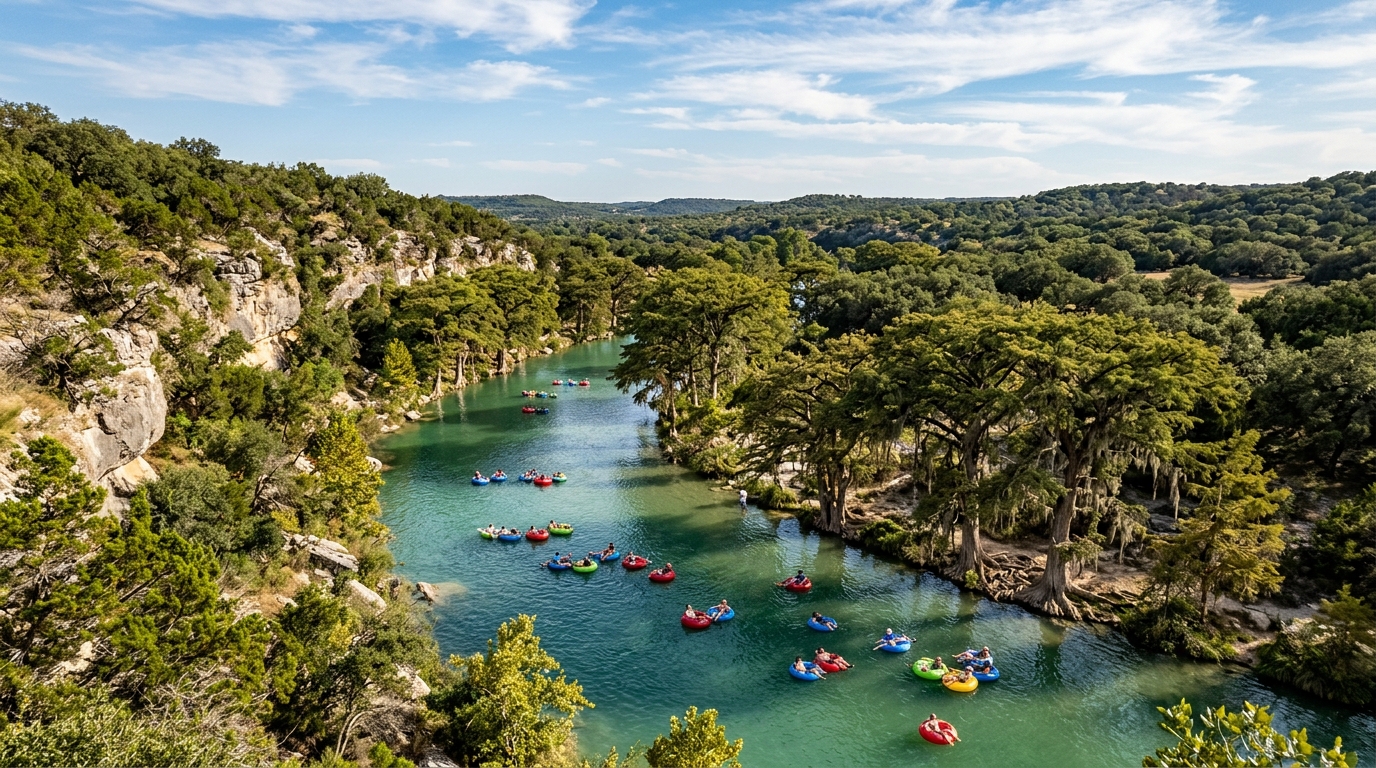
Look, it’s April 24th, and if you’ve lived in the Texas Hill Country for more than five minutes, you know that the 'nice' weather is about to turn into a full-blown furnace. When that happens, there’s only one sane thing to do: grab a tube, a cold drink, and hit the Guadalupe River. I’ve lived and built homes out here for over 20 years — personally put up over 400 of them — and I’ve seen the river at its best, its worst, and its 'too crowded to see the water' busiest. Tiffany and I get asked all the time where the best spots are, and honestly, it depends on if you want a party or a peaceful float. Here’s the real deal on how to do it right without looking like a tourist who just stepped off a plane from Jersey.
Where are the best places to tube the Guadalupe River?
A: The two most popular spots for tubing the Guadalupe are the 'Horseshoe' loop in Sattler (near Canyon Lake) and the 'Chute' in New Braunfels. If you’re looking for the classic Hill Country experience, the Horseshoe on FM 306 is the place to be. It’s a literal horseshoe-shaped bend in the river, which means you can float for about an hour and end up right back where you started — or just walk across the street and do it again. It’s located right near the Canyon Lake dam, so the water is usually pretty consistent. If you want something a bit more adventurous with some actual 'rapids' (I use that term loosely), you head down to New Braunfels near Prince Solms Park. That’s where the Chute is. It’s a man-made slide that’ll spit you out into the river. It’s fun, but it gets packed. Like, shoulder-to-shoulder packed. If you’re coming from our neck of the woods in Spring Branch or Bulverde, the Horseshoe is a much easier drive. You just take HWY 46 to 306 and you’re there.
Anyway — another thing to consider is the vibe. The Horseshoe attracts a lot of the concert crowd because the Whitewater Amphitheater is right there. If there’s a big show on a Saturday night, that river is going to be a zoo. If you’re looking for something quieter, I usually tell people to head further downstream toward New Braunfels or even look into the upper Guadalupe near Bergheim, though the water levels there are a lot more finicky. You’ve gotta check the flow rates before you load up the truck. I’ve seen people dragging their tubes over dry rocks because they didn't check the USGS gauges first. Don't be that guy.
How long does it take to tube the Guadalupe?
A: A typical float on the Guadalupe River takes between 2 to 4 hours, depending on the flow rate (measured in cfs) and the specific route you choose. Flow rates are the lifeblood of the river. According to the USGS water data for the Guadalupe River at Sattler, a 'good' flow for tubing is usually between 200 and 400 cfs (cubic feet per second). If it’s down around 100 cfs, you’re going to be doing some paddling and maybe some walking. If it’s over 1,000 cfs, the rental places might not even let you on the river because it gets dangerous. My advice? Always check the 'Real-Time Water Data' on the USGS website before you leave the house.
Look, I’ve been on floats that took six hours because the wind was blowing the wrong way and the water was barely moving. It sounds fun until you’re sunburnt to a crisp and your beer is warm. If you’re doing the Horseshoe, it’s a short loop, maybe 45 minutes to an hour. Most people do it twice. If you put in at one of the outfitters like Rockin’ R or Shanty Tubes and float down to a different exit point, you’re looking at a solid 3-hour commitment. Make sure you’ve got a shuttle plan. There’s nothing worse than getting out of the river four miles from your truck with no way to get back. Most of the outfitters offer a shuttle service for a few bucks — just pay it. It’s worth every penny to not have to walk along the shoulder of FM 306 in flip-flops carrying a giant rubber donut.
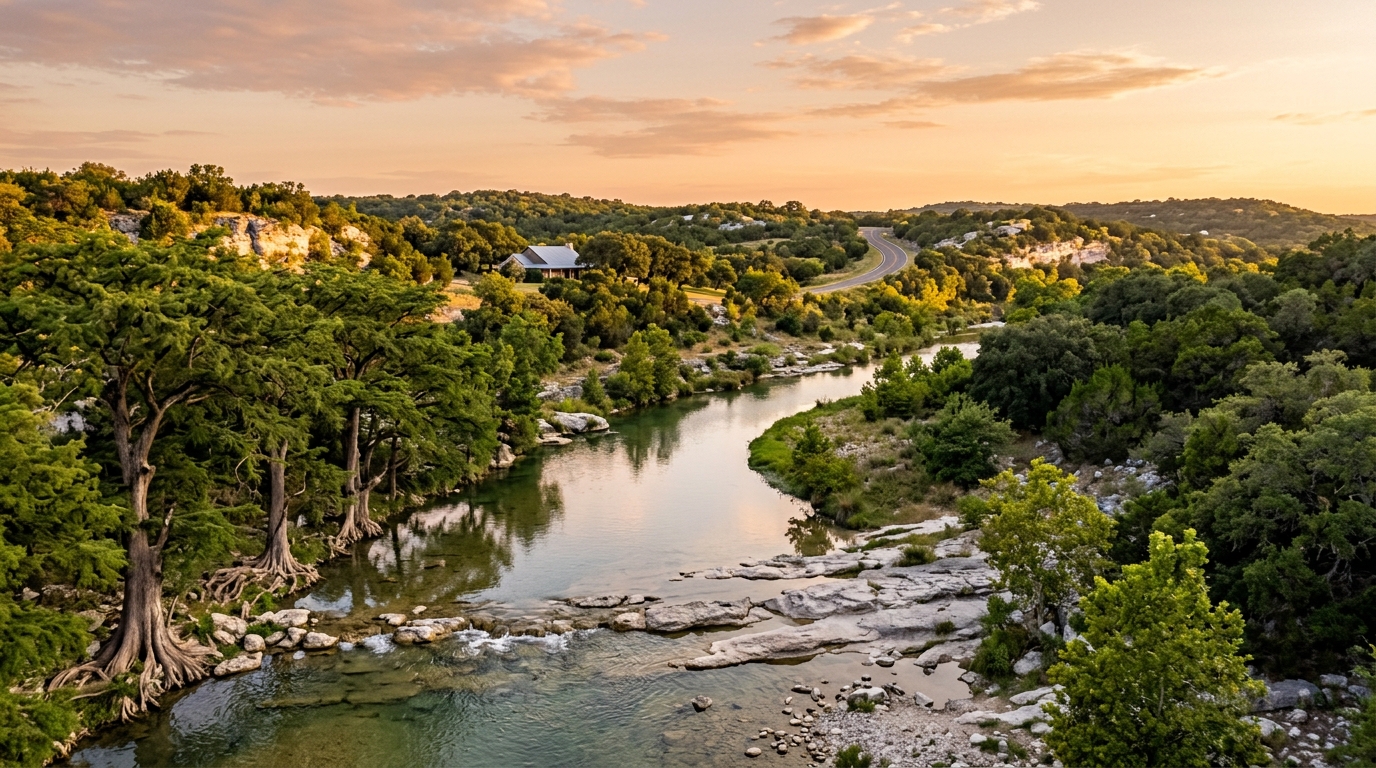
Quick tangent: if you’re floating the river and looking up at those houses on the limestone bluffs thinking, 'Man, I’d love to live here,' give me a call. But be warned — building on those cliffs isn't for the faint of heart. I’ve done plenty of foundation work in this rocky soil, and it takes a specific approach. Over at Parker Design and Consulting, we use what I call 'The Parker Method' to make sure these homes actually stay on the hill. It’s not just about the view; it’s about the engineering. We also handle commercial real estate along the 281 and 3009 corridors if you’re looking to bring a business out this way. Growth is exploding from San Antonio to Blanco, and the river is the main draw.
What are the river rules for 2026?
A: As of 2026, the 'Can Ban' (disposable container ordinance) is strictly enforced within the New Braunfels city limits, but rules vary for the sections of the river in Comal County. This is where people get confused and end up with a hefty fine. If you are inside the New Braunfels city limits, you cannot have disposable containers. No cans, no glass, no plastic bottles. You have to use reusable containers like Yetis or Nalgene bottles. However, if you are floating the Guadalupe in the county (like the Horseshoe area), you can still have cans — but glass and Styrofoam are strictly prohibited everywhere. Seriously, do not bring glass. It’s dangerous for everyone and the local deputies have zero patience for it.
And for the love of everything holy, tie your stuff down. I can’t tell you how many flip-flops, sunglasses, and keys I’ve seen floating toward the Gulf of Mexico. Use a carabiner. Tie your cooler tube to your main tube. Use a waterproof pouch for your phone. Every year, I see someone crying at the exit because their car keys are at the bottom of a deep hole near the 4th crossing. Oh, and wear shoes. Not just flip-flops — actual water shoes or old sneakers. The rocks in the Guadalupe are covered in algae and they’re slicker than a politician’s promise. You will fall, and it will hurt.
Anyway, that’s my two cents on the river. It’s one of the best things about living in the Hill Country, provided you don't act like a jerk and you respect the water. If you're looking for a home near the water — or maybe a spot with enough room to build your own custom river retreat — check out the listings on our property search page. Tiffany and I know this dirt better than anyone. See ya on the river.
Guadalupe River FAQ
How cold is the water in the Guadalupe River?
The water is released from the bottom of Canyon Lake, so it stays around 55 to 60 degrees Fahrenheit year-round. It’s pretty refreshing when it’s 100 degrees out, but it’ll take your breath away for the first ten seconds. According to the GBRA (Guadalupe-Blanco River Authority), these temperatures are consistent because of the depth of the lake intake.
Do I need a permit to tube the Guadalupe?
You don’t need a personal permit, but you will likely pay a 'river fee' or 'management fee' if you use a professional outfitter or park in a public access area. In New Braunfels, there is a River Park Fee (around $2 per person as of 2026) that is usually included in your tube rental or wristband price.
Can I bring my own tube to the river?
Yes, you can bring your own tube, but you’ll still have to pay for parking and potentially a shuttle fee if you don't have two cars to stage at the entrance and exit. Make sure your tube is heavy-duty. The Guadalupe has rocks and branches that will pop a cheap pool float from a big-box store in about five minutes.
Frequently Asked Questions
Where is the best place to park for the Horseshoe loop?
Most people park at the various outfitters along FM 306 or at the parking lots near the Whitewater Amphitheater. Expect to pay $20-$40 for parking on peak weekends in 2026.
What is the 'Can Ban' rule on the Guadalupe?
Within the New Braunfels city limits, disposable containers like cans and plastic bottles are prohibited. In the county sections (like the Horseshoe), cans are allowed but glass and Styrofoam are banned everywhere.
Is the Guadalupe River safe for kids?
Generally yes, but it depends on the flow rate. At normal levels (200-400 cfs), it's a lazy float. Always use life jackets for kids, as there are deeper holes and swifter currents near the chutes.
Leave a Comment